

Mon - Sat 8.00 - 18.00 Sunday CLOSEDOur Address11 Wall St, New York
Tel: 530-666-6671
loan.jpg

November 2, 2021by admin

What if you decide to, or are asked to, guarantee a loan to your corporation? Before agreeing to act as a guarantor, endorser or indemnitor of a debt obligation of your closely held corporation, be aware of the possible tax consequences. If your corporation defaults on the loan and you’re required to pay principal or interest under the guarantee agreement, you don’t want to be blindsided.

Business vs. nonbusiness

If you’re compelled to make good on the obligation, the payment of principal or interest in discharge of the obligation generally results in a bad debt deduction. This may be either a business or a nonbusiness bad debt deduction. If it’s a business bad debt, it’s deductible against ordinary income. A business bad debt can be either totally or partly worthless. If it’s a nonbusiness bad debt, it’s deductible as a short-term capital loss, which is subject to certain limitations on deductions of capital losses. A nonbusiness bad debt is deductible only if it’s totally worthless.

In order to be treated as a business bad debt, the guarantee must be closely related to your trade or business. If the reason for guaranteeing the corporation loan is to protect your job, the guarantee is considered closely related to your trade or business as an employee. But employment must be the dominant motive. If your annual salary exceeds your investment in the corporation, this tends to show that the dominant motive for the guarantee was to protect your job. On the other hand, if your investment in the corporation substantially exceeds your annual salary, that’s evidence that the guarantee was primarily to protect your investment rather than your job.

Except in the case of job guarantees, it may be difficult to show the guarantee was closely related to your trade or business. You’d have to show that the guarantee was related to your business as a promoter, or that the guarantee was related to some other trade or business separately carried on by you.

If the reason for guaranteeing your corporation’s loan isn’t closely related to your trade or business and you’re required to pay off the loan, you can take a nonbusiness bad debt deduction if you show that your reason for the guarantee was to protect your investment, or you entered the guarantee transaction with a profit motive.

In addition to satisfying the above requirements, a business or nonbusiness bad debt is deductible only if:

  • You have a legal duty to make the guaranty payment, although there’s no requirement that a legal action be brought against you;
  • The guaranty agreement was entered into before the debt becomes worthless; and
  • You received reasonable consideration (not necessarily cash or property) for entering into the guaranty agreement.

Any payment you make on a loan you guaranteed is deductible as a bad debt in the year you make it, unless the agreement (or local law) provides for a right of subrogation against the corporation. If you have this right, or some other right to demand payment from the corporation, you can’t take a bad debt deduction until the rights become partly or totally worthless.

These are only a few of the possible tax consequences of guaranteeing a loan to your closely held corporation. Contact us to learn all the implications in your situation.

Taxes-Due-538x218.jpg

November 1, 2021by admin

During November

Employers – Income tax withholding. Encourage employees to fill out a new Form W-4 for 2022 if they experienced any personal or financial changes. The 2022 revision of Form W-4 will be available on the IRS website by mid-December.

November 1

Employers – Social Security, Medicare, and withheld income tax. File Form 941 for the second quarter of 2021. Deposit any undeposited tax. (If your tax liability is less than $2,500, you can pay it in full with a timely filed return.) If you deposited the tax for the quarter in full and on time, you have until November 10 to file the return.

Certain Small Employers – Deposit any undeposited tax if your tax liability is $2,500 or more for 2021 but less than $2,500 for the third quarter.

Employers – Federal Unemployment Tax. Deposit the tax owed through September if more than $500.

November 10

Employees Who Work for Tips – If you received $20 or more in tips during October, report them to your employer. You can use Form 4070.

Employers – Social Security, Medicare, and withheld income tax. File Form 941 for the third quarter of 2021. This due date only applies if you deposited the tax for the quarter timely, properly, and in full.

November 15

Employers – Social Security, Medicare, and withheld income tax. If the monthly deposit rule applies, deposit the tax for payments in October.

Employers – Nonpayroll withholding. If the monthly deposit rule applies, deposit the tax for payments in October.


09_27_21_1337743141_SBTB_560x292.jpg

November 1, 2021by admin

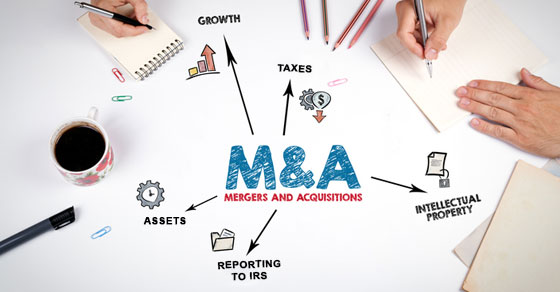
Low interest rates and other factors have caused global merger and acquisition (M&A) activity to reach new highs in 2021, according to Refinitiv, a provider of financial data. It reports that 2021 is set to be the biggest in M&A history, with the United States accounting for $2.14 trillion worth of transactions already this year. If you’re considering buying or selling a business — or you’re in the process of an M&A transaction — it’s important that both parties report it to the IRS and state agencies in the same way. Otherwise, you may increase your chances of being audited.

If a sale involves business assets (as opposed to stock or ownership interests), the buyer and the seller must generally report to the IRS the purchase price allocations that both use. This is done by attaching IRS Form 8594, “Asset Acquisition Statement,” to each of their respective federal income tax returns for the tax year that includes the transaction.

Here’s what must be reported

If you buy business assets in an M&A transaction, you must allocate the total purchase price to the specific assets that are acquired. The amount allocated to each asset then becomes its initial tax basis. For depreciable and amortizable assets, the initial tax basis of each asset determines the depreciation and amortization deductions for that asset after the acquisition. Depreciable and amortizable assets include:

  • Equipment,
  • Buildings and improvements,
  • Software,
  • Furniture, fixtures and
  • Intangibles (including customer lists, licenses, patents, copyrights and goodwill).

In addition to reporting the items above, you must also disclose on Form 8594 whether the parties entered into a noncompete agreement, management contract or similar agreement, as well as the monetary consideration paid under it.

What the IRS might examine

The IRS may inspect the forms that are filed to see if the buyer and the seller use different allocations. If the tax agency finds that different allocations are used, auditors may dig deeper and the examination could expand beyond the transaction. So, it’s best to ensure that both parties use the same allocations. Consider including this requirement in your asset purchase agreement at the time of the sale.

The tax implications of buying or selling a business are complex. Price allocations are important because they affect future tax benefits. Both the buyer and the seller need to report them to the IRS in an identical way to avoid unwanted attention. To lock in the best results after an acquisition, consult with us before finalizing any transaction.


08_02_21_1303313537_SBTB_560x292.jpg

October 4, 2021by admin

Perhaps you operate your small business as a sole proprietorship and want to form a limited liability company (LLC) to protect your assets. Or maybe you are launching a new business and want to know your options for setting it up. Here are the basics of operating as an LLC and why it might be appropriate for your business.

An LLC is somewhat of a hybrid entity because it can be structured to resemble a corporation for owner liability purposes and a partnership for federal tax purposes. This duality may provide the owners with the best of both worlds.

Personal asset protection

Like the shareholders of a corporation, the owners of an LLC (called “members” rather than shareholders or partners) generally aren’t liable for the debts of the business except to the extent of their investment. Thus, the owners can operate the business with the security of knowing that their personal assets are protected from the entity’s creditors. This protection is far greater than that afforded by partnerships. In a partnership, the general partners are personally liable for the debts of the business. Even limited partners, if they actively participate in managing the business, can have personal liability.

Tax implications

The owners of an LLC can elect under the “check-the-box” rules to have the entity treated as a partnership for federal tax purposes. This can provide a number of important benefits to the owners. For example, partnership earnings aren’t subject to an entity-level tax. Instead, they “flow through” to the owners, in proportion to the owners’ respective interests in profits, and are reported on the owners’ individual returns and are taxed only once.

To the extent the income passed through to you is qualified business income, you’ll be eligible to take the Code Section 199A pass-through deduction, subject to various limitations. In addition, since you’re actively managing the business, you can deduct on your individual tax return your ratable shares of any losses the business generates. This, in effect, allows you to shelter other income that you and your spouse may have.

An LLC that’s taxable as a partnership can provide special allocations of tax benefits to specific partners. This can be an important reason for using an LLC over an S corporation (a form of business that provides tax treatment that’s similar to a partnership). Another reason for using an LLC over an S corporation is that LLCs aren’t subject to the restrictions the federal tax code imposes on S corporations regarding the number of owners and the types of ownership interests that may be issued.

Review your situation

In summary, an LLC can give you corporate-like protection from creditors while providing the benefits of taxation as a partnership. For these reasons, you should consider operating your business as an LLC. Contact us to discuss in more detail how an LLC might benefit you and the other owners.


07_26_21_966539640_SBTB_560x292.jpg

October 4, 2021by admin

Do you play a major role in a closely held corporation and sometimes spend money on corporate expenses personally? These costs may wind up being nondeductible both by an officer and the corporation unless proper steps are taken. This issue is more likely to arise in connection with a financially troubled corporation.

Deductible vs. nondeductible expenses

In general, you can’t deduct an expense you incur on behalf of your corporation, even if it’s a legitimate “trade or business” expense and even if the corporation is financially troubled. This is because a taxpayer can only deduct expenses that are his own. And since your corporation’s legal existence as a separate entity must be respected, the corporation’s costs aren’t yours and thus can’t be deducted even if you pay them.

What’s more, the corporation won’t generally be able to deduct them either because it didn’t pay them itself. Accordingly, be advised that it shouldn’t be a practice of your corporation’s officers or major shareholders to cover corporate costs.

When expenses may be deductible

On the other hand, if a corporate executive incurs costs that relate to an essential part of his or her duties as an executive, they may be deductible as ordinary and necessary expenses related to his or her “trade or business” of being an executive. If you wish to set up an arrangement providing for payments to you and safeguarding their deductibility, a provision should be included in your employment contract with the corporation stating the types of expenses which are part of your duties and authorizing you to incur them. For example, you may be authorized to attend out-of-town business conferences on the corporation’s behalf at your personal expense.

Alternatively, to avoid the complete loss of any deductions by both yourself and the corporation, an arrangement should be in place under which the corporation reimburses you for the expenses you incur. Turn the receipts over to the corporation and use an expense reimbursement claim form or system. This will at least allow the corporation to deduct the amount of the reimbursement.

Contact us if you’d like assistance or would like to discuss these issues further.


07_19_21_485698796rev_SBTB_560x292.jpg

October 4, 2021by admin

Despite the COVID-19 pandemic, government officials are seeing a large increase in the number of new businesses being launched. From June 2020 through June 2021, the U.S. Census Bureau reports that business applications are up 18.6%. The Bureau measures this by the number of businesses applying for an Employer Identification Number.

Entrepreneurs often don’t know that many of the expenses incurred by start-ups can’t be currently deducted. You should be aware that the way you handle some of your initial expenses can make a large difference in your federal tax bill.

How to treat expenses for tax purposes

If you’re starting or planning to launch a new business, keep these three rules in mind:

  1. Start-up costs include those incurred or paid while creating an active trade or business — or investigating the creation or acquisition of one.
  2. Under the tax code, taxpayers can elect to deduct up to $5,000 of business start-up and $5,000 of organizational costs in the year the business begins. As you know, $5,000 doesn’t go very far these days! And the $5,000 deduction is reduced dollar-for-dollar by the amount by which your total start-up or organizational costs exceed $50,000. Any remaining costs must be amortized over 180 months on a straight-line basis.
  3. No deductions or amortization deductions are allowed until the year when “active conduct” of your new business begins. Generally, that means the year when the business has all the pieces in place to start earning revenue. To determine if a taxpayer meets this test, the IRS and courts generally ask questions such as: Did the taxpayer undertake the activity intending to earn a profit? Was the taxpayer regularly and actively involved? Did the activity actually begin?

Eligible expenses

In general, start-up expenses are those you make to:

  • Investigate the creation or acquisition of a business,
  • Create a business, or
  • Engage in a for-profit activity in anticipation of that activity becoming an active business.

To qualify for the election, an expense also must be one that would be deductible if it were incurred after a business began. One example is money you spend analyzing potential markets for a new product or service.

To be eligible as an “organization expense,” an expense must be related to establishing a corporation or partnership. Some examples of organization expenses are legal and accounting fees for services related to organizing a new business and filing fees paid to the state of incorporation.

Plan now

If you have start-up expenses that you’d like to deduct this year, you need to decide whether to take the election described above. Recordkeeping is critical. Contact us about your start-up plans. We can help with the tax and other aspects of your new business.


08_09_21_1187866047_SBTB_560x292.jpg

October 4, 2021by admin

If your business receives large amounts of cash or cash equivalents, you may be required to report these transactions to the IRS.

What are the requirements?

Each person who, in the course of operating a trade or business, receives more than $10,000 in cash in one transaction (or two or more related transactions), must file Form 8300. What is considered a “related transaction?” Any transactions conducted in a 24-hour period. Transactions can also be considered related even if they occur over a period of more than 24 hours if the recipient knows, or has reason to know, that each transaction is one of a series of connected transactions.

To complete a Form 8300, you’ll need personal information about the person making the cash payment, including a Social Security or taxpayer identification number.

Why does the government require reporting?

Although many cash transactions are legitimate, the IRS explains that “information reported on (Form 8300) can help stop those who evade taxes, profit from the drug trade, engage in terrorist financing and conduct other criminal activities. The government can often trace money from these illegal activities through the payments reported on Form 8300 and other cash reporting forms.”

You should keep a copy of each Form 8300 for five years from the date you file it, according to the IRS.

What’s considered “cash” and “cash equivalents?”

For Form 8300 reporting purposes, cash includes U.S. currency and coins, as well as foreign money. It also includes cash equivalents such as cashier’s checks (sometimes called bank checks), bank drafts, traveler’s checks and money orders.

Money orders and cashier’s checks under $10,000, when used in combination with other forms of cash for a single transaction that exceeds $10,000, are defined as cash for Form 8300 reporting purposes.

Note: Under a separate reporting requirement, banks and other financial institutions report cash purchases of cashier’s checks, treasurer’s checks and/or bank checks, bank drafts, traveler’s checks and money orders with a face value of more than $10,000 by filing currency transaction reports.

Can the forms be filed electronically?

Businesses required to file reports of large cash transactions on Form 8300 should know that in addition to filing on paper, e-filing is an option. The form is due 15 days after a transaction and there’s no charge for the e-file option. Businesses that file electronically get an automatic acknowledgment of receipt when they file.

The IRS also reminds businesses that they can “batch file” their reports, which is especially helpful to those required to file many forms.

How can we set up an electronic account?

To file Form 8300 electronically, a business must set up an account with FinCEN’s Bank Secrecy Act E-Filing System. For more information, visit: https://bsaefiling.fincen.treas.gov/AboutBsa.html. Interested businesses can also call the BSA E-Filing Help Desk at 866-346-9478 (Monday through Friday from 8 am to 6 pm EST). Contact us with any questions or for assistance.


Taxes-Due-538x218.jpg

October 1, 2021by admin

October 12, 2021

Employees – who work for tips. If you received $20 or more in tips during September, report them to your employer. You can use Form 4070.

October 15, 2021

Individuals – If you have an automatic 6-month extension to file your income tax return for 2020, file Form 1040 or Form 1040-SR and pay any tax, interest, and penalties due.

Employers – Nonpayroll withholding. If the monthly deposit rule applies, deposit the tax for payments in September.

Employers – Social Security, Medicare, and withheld income tax. If the monthly deposit rule applies, deposit the tax for payments in September.

Corporations – File a 2020 calendar year income tax return (Form 1120) and pay any tax, interest, and penalties due. This due date applies only if you timely requested an automatic 6-month extension.


smallbiz.jpg

September 13, 2021by admin

The week of September 13-17 has been declared National Small Business Week by the Small Business Administration. To commemorate the week, here are three tax breaks to consider.

1. Claim bonus depreciation or a Section 179 deduction for asset additions

Under current law, 100% first-year bonus depreciation is available for qualified new and used property that’s acquired and placed in service in calendar year 2021. That means your business might be able to write off the entire cost of some or all asset additions on this year’s return. Consider making acquisitions between now and December 31.

Note: It doesn’t always make sense to claim a 100% bonus depreciation deduction in the first year that qualifying property is placed in service. For example, if you think that tax rates will increase in the future — either due to tax law changes or a change in your income — it might be better to forgo bonus depreciation and instead depreciate your 2021 asset acquisitions over time.

There’s also a Section 179 deduction for eligible asset purchases. The maximum Section 179 deduction is $1.05 million for qualifying property placed in service in 2021. Recent tax laws have enhanced Section 179 and bonus depreciation but most businesses benefit more by claiming bonus depreciation. We can explain the details of these tax breaks and which is right for your business. You don’t have to decide until you file your tax return.

2. Claim bonus depreciation for a heavy vehicle 

The 100% first-year bonus depreciation provision can have a sizable, beneficial impact on first-year depreciation deductions for new and used heavy SUVs, pickups and vans used over 50% for business. For federal tax purposes, heavy vehicles are treated as transportation equipment so they qualify for 100% bonus depreciation.

This option is available only when the manufacturer’s gross vehicle weight rating (GVWR) is above 6,000 pounds. You can verify a vehicle’s GVWR by looking at the manufacturer’s label, usually found on the inside edge of the driver’s side door.

Buying an eligible vehicle and placing it in service before the end of the year can deliver a big write-off on this year’s return. Before signing a sales contract, we can help evaluate what’s right for your business.

3. Maximize the QBI deduction for pass-through businesses 

A valuable deduction is the one based on qualified business income (QBI) from pass-through entities. For tax years through 2025, the deduction can be up to 20% of a pass-through entity owner’s QBI. This deduction is subject to restrictions that can apply at higher income levels and based on the owner’s taxable income.

For QBI deduction purposes, pass-through entities are defined as sole proprietorships, single-member LLCs that are treated as sole proprietorships for tax purposes, partnerships, LLCs that are treated as partnerships for tax purposes and S corporations. For these taxpayers, the deduction can also be claimed for up to 20% of income from qualified real estate investment trust dividends and 20% of qualified income from publicly traded partnerships.

Because of various limitations on the QBI deduction, tax planning moves can unexpectedly increase or decrease it. For example, strategies that reduce this year’s taxable income can have the negative side-effect of reducing your QBI deduction.

Plan ahead

These are only a few of the tax breaks your small business may be able to claim. Contact us to help evaluate your planning options and optimize your tax results.


2021-07-09_15-02-18.png

September 1, 2021by admin

In employment settings in which women save less for retirement than men, an aggressive educational program can help to narrow the gap. That’s the conclusion of a study conducted by the Center for Retirement Research.

The study

The study focused on the impact of an initiative by the state of Wisconsin to close a retirement savings gender gap among state employees. Although Wisconsin state employees were also covered by defined benefit plans, increasing women’s contributions to a state-sponsored supplemental retirement plan was considered essential to their retirement security.

The study’s authors reported that, while financial education outside of the workplace typically doesn’t correlate with increases in retirement savings, workplace-based education efforts generally are effective. The Wisconsin initiative “delivered information, motivation, and challenges through multiple media over a span of a few months.” For example, women received monthly emails with messages such as “women are twice as likely as men to live in poverty during retirement,” with links to online educational resources and financial planning tools. Such messages apparently hit home.

Women were also invited to attend women-only lunchtime education sessions, and the resulting participation rates were high. Rather than lectures, the program format emphasized peer interaction to overcome what the study’s authors call “the ostrich effect” — a reluctance of people to discuss personal finance matters, especially if they’re already worried about their financial health. Program content directed participants to take specific actions to improve their financial outlook, particularly increasing their participation in the supplemental retirement savings plan.

The results

According to the study, “Differences between men and women in financial knowledge and motivation contribute to gender gaps in retirement savings.” However, the study concluded that using multimedia financial education can increase knowledge and motivate participants.