

Mon - Sat 8.00 - 18.00 Sunday CLOSEDOur Address11 Wall St, New York
Tel: 530-666-6671 Pay With Square
06_08_26_2671036453_SBTB_560x292.jpg

June 20, 2026by admin

If you’re self-employed, you probably have questions about deducting business expenses on your federal income tax return. Here’s a quick overview of the filing requirements for sole proprietors and independent contractors, and five examples of expense deductions that are commonly overlooked or misunderstood.

Filing basics

Sole proprietors and independent contractors must report their business activity on Schedule C, “Profit or Loss From Business,” of their personal tax returns (Form 1040). Business income includes money earned from customers, side gigs, online sales and other self-employment activities. Income may be reported on Forms 1099-NEC or 1099-K, but you must report all taxable business income, even if you don’t receive a tax form.

Although employees can no longer deduct unreimbursed business expenses, self-employed individuals can offset their business income with various deductions for business-related expenses. This is a major tax advantage for the self-employed.

When evaluating whether costs are deductible, follow this golden rule: Business expenses must be ordinary (common in your industry) and necessary (helpful and appropriate for the business). Of course, you’ll need to keep detailed records to support your business deductions. Obvious examples of potentially deductible expenses are supplies, materials, and, if you have employees, payroll and benefits. Other business-related expenses may also be deductible on Schedule C, though the rules are sometimes confusing. Below are five common examples.

1. Home office

Unlike employees who work remotely, you can deduct the costs for a workspace in your home that’s used regularly and exclusively as your principal place of business. This can include a portion of actual indirect home expenses — such as rent or mortgage interest, insurance, utilities and repairs — based on your business-use percentage. For instance, if you use 10% of your apartment’s square footage for business, you can deduct 10% of your rent.

You can also fully deduct direct expenses (for example, the cost of painting your office) and, if you own your home, claim a depreciation allowance under IRS tables. In lieu of tracking your actual expenses, the IRS also offers a simplified method of $5 per square foot for up to 300 square feet.

2. Education

The costs of refresher courses, continuing education classes, vocational training and other education programs may be deductible if you’re required to take them to maintain or improve skills required for your current trade or business. Qualifying expenses include tuition, books, supplies and fees, and potentially travel costs to attend education programs.

However, costs of education that’s needed to meet the minimum requirements for a trade or business or that qualifies you for a new trade or business generally aren’t deductible. For example, you can’t claim the cost to obtain an undergraduate degree as a business expense.

3. Business meals

You generally can deduct 50% of the costs of business meals if they aren’t “lavish or extravagant.” This applies to food and beverages provided to customers, clients, suppliers, employees, agents, partners or professional advisors — whether established or prospective.

Although entertainment costs aren’t deductible under current law, food and beverages might be deductible even if they’re provided at a nondeductible entertainment activity. But such a deduction is available only if:

  • The food and beverage items are separately purchased or identified from the entertainment costs on bills, invoices or receipts, and
  • The amount charged for food or beverages reflects the venue’s usual selling price for those items if purchased separately from the entertainment or approximates the reasonable value of those items.

Say, for example, that you take a customer to a World Cup match this summer. The ticket costs aren’t deductible. But if you buy the customer popcorn, nachos and drinks while there, you can deduct half of those costs as long as you have proper documentation, such as the itemized receipt, and records showing who attended and the business purpose.

4. Business travel

If you travel to a temporary location for business purposes, you can deduct your travel expenses, including round-trip airfare, hotel costs and other incidentals (such as tips and cab fares). However, the primary purpose of your trip must be business related. For instance, you might travel to a different city or country to attend a trade show or educational conference.

Beware: Some allocations may be required if a trip combines business and pleasure — for example, if you fly to a location for four days of business meetings and stay for an additional three days of vacation. Only the reasonable cost of lodging and 50% of meals incurred during the business days are deductible. Lodging and meal costs incurred for the personal vacation days aren’t deductible.

On the other hand, with respect to the cost of the travel itself (for example, plane fare), if the trip is primarily for business purposes, the travel cost can be deducted in its entirety, and no allocation is required. Conversely, if the trip is primarily personal, none of the travel costs are deductible.

If your spouse joins you, his or her travel expenses generally aren’t deductible, unless your spouse is your employee and has a bona fide business reason to be there. But the restrictions apply only to additional costs incurred by having your nonemployee spouse travel with you. For example, the expense of a hotel room or for traveling by car would likely still be fully deductible because the cost to rent the room or travel by car alone vs. with another person would be the same, even in a rented car.

5. Business vehicle expenses

If you drive your personal vehicle for business purposes, you may be eligible to deduct some auto-related expenses on Schedule C. The amount of your deduction is based on the percentage of business use.

For example, suppose you use your car 60% for business driving in 2026. That means you can deduct 60% of your vehicle costs — such as gas, repairs and insurance — plus a generous depreciation allowance, subject to certain limits for “luxury cars.” And, if you buy the vehicle in 2026, you may also qualify for a Section 179 deduction and 100% bonus depreciation, subject to applicable eligibility requirements and limitations.

Be aware that the IRS is a stickler for documentation. Briefly stated, you must keep a contemporaneous log listing every business trip and proof of your expenses. Alternatively, you can cut down on recordkeeping by using the standard mileage rate of 72.5 cents per business mile (plus business-related tolls and parking fees) in 2026.

Don’t leave tax savings on the table

Many self-employed taxpayers miss legitimate deductions because they fail to keep adequate records or misunderstand the rules. Tracking expenses throughout the year can make tax filing easier, help ensure you don’t miss legitimate deductions and strengthen your position if the IRS questions a deduction.

We can help you identify qualifying business expense deductions and establish recordkeeping practices that support them. Contact us to start discussing a tax strategy tailored to your small business.

05_26_26_2111902757_SBTB_560x292.jpg

June 20, 2026by admin

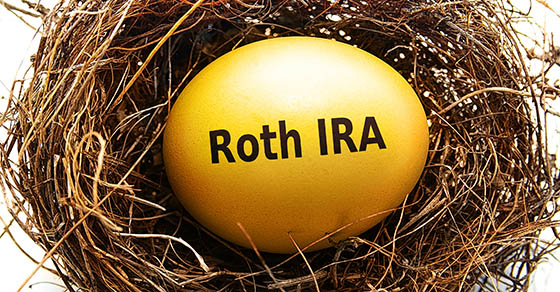
Some small business owners overlook Roth IRAs because they assume their income is too high for them to qualify to make Roth contributions. Others may think their current tax rate is higher than it will be in retirement, making current tax deductions more valuable than future tax-free distributions. However, if you don’t at least consider contributing to a Roth IRA, you may be missing a potentially valuable tax-saving opportunity.

Rules and restrictions

Roth IRA contributions aren’t deductible, but they’re beneficial because you reap tax savings on the back end. (More on that later.) For 2026, the annual contribution limit is $7,500 (up from $7,000 for 2025). If you’ll be 50 or older by the end of the tax year, you can make an additional $1,100 catch-up contribution. The same limits apply to traditional IRAs, and your Roth IRA limit is reduced by any traditional IRA contributions you make for the year.

But your ability to make Roth IRA contributions is phased out if your modified adjusted gross income (MAGI) exceeds certain levels. For 2026, the phaseout ranges are:

  • $153,000 to $168,000 for single individuals and heads of households, and
  • $242,000 to $252,000 for married couples filing jointly.

If your MAGI falls within the range, your contribution limit is reduced. If it equals or exceeds the top of the range, your ability to contribute is eliminated.

Married individuals who file separately and live apart for the full year are treated as single individuals for the income limitations. However, separate filers who live together at any time during the year are subject to a phaseout range of $0 to $10,000.

Is your income too high to qualify?

At first glance, these figures may cause you to assume you’re ineligible for Roth contributions. But take another look.

When calculating MAGI for Roth IRA eligibility purposes, self-employed individuals may be able to significantly reduce their taxable income through deductions for:

  • Certain business expenses, such as rent, home office expenses and computer costs,
  • Contributions to a tax-deferred retirement plan, such as a solo 401(k), SEP IRA or SIMPLE,
  • Health insurance premiums, and
  • Self-employment tax.

These deductions, along with others, are subtracted when calculating MAGI. Therefore, a self-employed person can have relatively high gross income from his or her business while having a much lower MAGI.

The choice between contributing to a Roth IRA or a tax-deferred account isn’t an all-or-nothing proposition. Depending on your situation, you may decide to contribute to both types of accounts, subject to applicable limits. Contributing to a tax-deferred retirement plan provides immediate tax savings. And, because these contributions lower your MAGI, they may put your taxable income below the phaseout limits for Roth IRA contributions.

Additional benefits

The main upside of contributing to a Roth IRA is that qualified withdrawals won’t be taxed. This can be advantageous if you expect to be in a higher tax bracket in retirement or if tax rates increase. Moreover, withdrawals from Roth accounts aren’t counted when calculating the taxable portion of your Social Security benefits.

Another Roth IRA advantage is that you don’t have to take withdrawals at any age, meaning the account can continue to grow tax-free. With a traditional IRA (and other tax-deferred retirement accounts), at age 73, you generally must begin to take required minimum distributions or face a penalty equal to 25% of the amount you should have withdrawn but didn’t. In addition, if your Roth IRA is passed on to your heirs, it can continue to grow tax-free, and their withdrawals generally will be tax-free. However, most nonspouse beneficiaries will be required to deplete the account within 10 years of inheriting it.

Bottom line

A Roth IRA offers many potential benefits, and self-employed individuals may be more likely to qualify to make Roth IRA contributions than other taxpayers with similar gross incomes. But they aren’t right for every situation. We can help evaluate your eligibility and develop a long-term retirement strategy that aligns with your personal and financial goals. Contact us to learn more.


09_08_25_2455728709_SBTB_560x292.jpg

October 19, 2025by admin

Do you and your spouse together operate a profitable unincorporated small business? If so, you face some challenging tax issues.

The partnership issue

An unincorporated business with your spouse is classified as a partnership for federal income tax purposes, unless you can avoid that treatment. Otherwise, you must file an annual partnership return using Form 1065. In addition, you and your spouse must be issued separate Schedules K-1, which allocate the partnership’s taxable income, deductions and credits between the two of you. This is only the beginning of the unwelcome tax compliance tasks.

The self-employment tax issue

Self-employment (SE) tax is how the government collects Social Security and Medicare taxes from self-employed individuals. For 2025, the SE tax consists of 12.4% Social Security tax on the first $176,100 of net SE income plus 2.9% Medicare tax. Once your 2025 net SE income surpasses the $176,100 ceiling, the Social Security tax component of the SE tax ends. But the 2.9% Medicare tax component continues before increasing to 3.8% — because of the 0.9% additional Medicare tax — if the combined net SE income of a married joint-filing couple exceeds $250,000. (This doesn’t include investment income.)

With your joint Form 1040, you must include a Schedule SE to calculate SE tax on your share of the net SE income passed through to you by your spousal partnership. The return must also include a Schedule SE for your spouse to calculate the tax on your spouse’s share of net SE income passed through to him or her. This can significantly increase your SE tax liability.

For example, let’s say you and your spouse each have net 2025 SE income of $150,000 ($300,000 total) from your profitable 50/50 partnership business. The SE tax on your joint tax return is a whopping $45,900 ($150,000 × 15.3% × 2). That’s on top of regular federal income tax. (However, you do get an income deduction for half of the SE tax.)

Here are three possible tax-saving solutions.

1. Use an IRS-approved method to minimize SE tax in a community property state

Under IRS guidance (Revenue Procedure 2002-69), there’s an exception to the general rule that spouse-run businesses are treated as partnerships. For federal tax purposes, you can treat an unincorporated spousal business in a community property state as a sole proprietorship operated by one of the spouses. By effectively allocating all the net SE income to the proprietor spouse, only the first $176,100 of net SE income is hit with the 12.4% Social Security tax. That can cut your SE tax bill.

2. Convert a spousal partnership into an S corporation and pay modest salaries

If you and your unincorporated spousal business aren’t in a community property state, consider converting the business to S corp status to reduce Social Security and Medicare taxes. That way, only the salaries paid to you and your spouse get hit with the Social Security and Medicare tax, collectively called FICA tax. You can then pay reasonable, but not excessive, salaries to you and your spouse as shareholder-employees while paying out most or all remaining corporate cash flow to yourselves as FICA-tax-free cash distributions. Keep in mind that S corps come with their own compliance obligations.

3. Disband your partnership and hire your spouse as an employee

You can disband the existing spousal partnership and start running the operation as a sole proprietorship operated by one spouse. Then hire the other spouse as an employee of the proprietorship. Pay that spouse a modest cash salary. You must withhold 7.65% from the salary to cover the employee-spouse’s share of the Social Security and Medicare taxes. The proprietorship must also pay 7.65% as the employer’s half of the taxes. However, because the employee-spouse’s salary is modest, the FICA tax will also be modest.

With this strategy, you file only one Schedule SE — for the spouse treated as the proprietor — with your joint tax return. That minimizes the SE tax because no more than $176,100 (for 2025) is exposed to the 12.4% Social Security portion of the SE tax.

Additional bonus: You may be able to provide certain employee benefits to your spouse, such as retirement contributions, which may provide more tax savings.

We can help

Having a profitable unincorporated business with your spouse that’s classified as a partnership for federal income tax purposes can lead to compliance headaches and high SE tax bills. Work with us to identify appropriate tax-saving strategies.