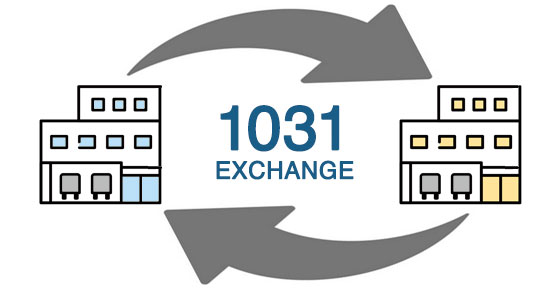


If you’re a real estate developer or a small business owner who owns commercial real estate, you might be thinking about selling a property. If it has appreciated significantly, a Section 1031 like-kind exchange may allow you to defer tax on some or all of the gain. With this transaction, you exchange one property for another qualifying property rather than sell the property outright. You generally don’t pay tax on the gain on the relinquished property until you sell the replacement property.
You may be familiar with the basics of a Sec. 1031 exchange, but you might not understand all the rules and restrictions. Here are four common myths to be aware of so you can avoid missing planning opportunities or facing unexpected taxes.
Myth 1: The replacement property must be identical to the property you give up
The definition of like-kind property is surprisingly broad. To qualify for Sec. 1031 exchange treatment, you may exchange any real property held for investment or productive use in your trade or business (relinquished property) for like-kind investment, trade or business real property (replacement property).
For these purposes, most real property is considered like-kind with other real property. However, neither the relinquished property nor the replacement property can be real property held primarily for sale.
Myth 2: You never have to pay current-year tax in a like-kind exchange
A properly structured Sec. 1031 exchange can defer gain. But that doesn’t mean every exchange is completely tax-free.
If it’s a straight property-for-property exchange, you generally won’t have to recognize any gain from the exchange. You’ll take the same basis (your cost for tax purposes) in the replacement property that you had in the relinquished property. Even if you don’t have to recognize any gain on the exchange, you must report it on Form 8824, “Like-Kind Exchanges.”
However, the properties aren’t always equal in value. In these situations, some cash may be added to the deal. This cash is known as “boot.” If you receive boot, you’ll have to recognize gain up to the amount of boot received.
For example, let’s say you exchange a building with a basis of $100,000 for a building valued at $125,000, plus $10,000 in cash. Your realized gain on the exchange is $35,000 because you received $135,000 in value for an asset with a basis of $100,000. However, because it’s a Sec. 1031 exchange, you have to currently recognize (and pay tax on) only $10,000 of your gain — the amount of cash (boot) you received.
It’s also important to remember that no matter how much boot you receive, you’ll never recognize more than your actual realized gain on the exchange. In addition, your basis in the like-kind replacement property you receive equals the basis you had in the relinquished property reduced by the amount of boot you received but increased by the amount of any gain recognized.
Myth 3: Cash is the only type of boot
Boot can take forms other than cash. If the property you’re exchanging is subject to debt from which you’re being relieved, the amount of the debt is generally treated as boot. The reason is that if someone takes over your debt, it’s equivalent to that person giving you cash.
Of course, if the replacement property is also subject to debt, then you’re treated as receiving boot only to the extent of your net debt relief — the amount by which the debt you become free of exceeds the debt you pick up.
Myth 4: You must have the replacement property lined up immediately
It’s possible — but rare — to find someone who wants to simultaneously swap like-kind properties with you. Fortunately, you don’t have to acquire the replacement property from the same party you relinquish your property to. And you don’t have to acquire the replacement property on the same day you transfer the relinquished property.
In most Sec. 1031 exchanges, the relinquished property is sold first, and the taxpayer uses the exchange proceeds to acquire a replacement property. However, a qualified intermediary must hold the proceeds from the relinquished property until they’re transferred to acquire the replacement property. And deadlines apply: Generally, you must 1) identify a potential replacement property within 45 days after transferring the relinquished property, and 2) complete the acquisition of the replacement property within 180 days.
These deadlines are strictly enforced. Missing either one can cause the entire transaction to lose tax-deferred treatment. While you don’t need to have the replacement property lined up immediately, you do need a plan. Begin evaluating replacement property options as early as possible and work closely with your professional advisors throughout the process.
Don’t let misconceptions derail your Sec. 1031 exchange
Like-kind exchanges can be a tax-savvy way to dispose of investment or business real property — and retain working capital for your business or investment activities. But you’ll need to meet all the requirements. If you’re considering selling investment or business real estate, contact us to discuss this strategy further.